
Alice in Wonderland Strain: Effects, Flavor & THC Guide
Alice in Wonderland is a sativa-dominant hybrid, consisting of 85% sativa and 15% indica, and is believed to have its origins in the renowned Willy’s Wonder strain. Willy’s Wonder (also sold as William’s Wonder) is a legacy indica from the 1980s, and most Alice in Wonderland cuts are treated as a specialized phenotype selection from that line. Some growers also report a Cinderella 99 influence, though the exact cross was never formally documented.
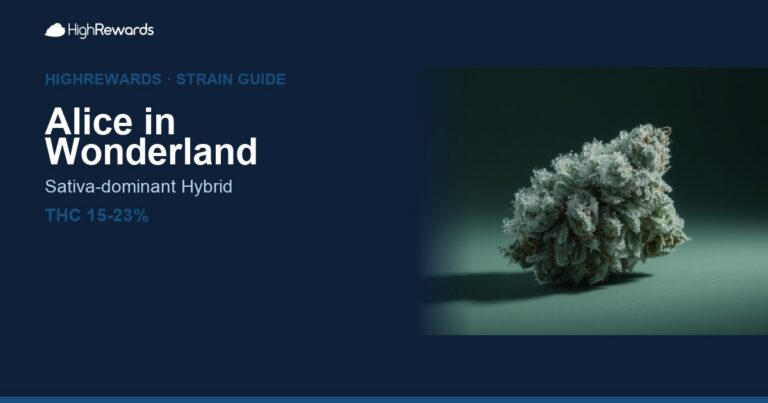
This strain features a THC concentration ranging from 15% to 23%, providing a diverse array of effects that can be likened to an adventurous journey through a rabbit hole. Users often experience a significant sensory elevation that enhances happiness, uplifts mood, and boosts creativity and focus. This makes Alice in Wonderland particularly suitable for outdoor activities or exploring new ideas, as it typically avoids the anxiety that some potent sativas may induce.
Medically, Alice in Wonderland is frequently recommended for individuals dealing with mild to moderate depression, stress, fatigue, and chronic pain resulting from injury or illness. Its therapeutic effects can offer relief and improve the overall quality of life for patients with these conditions.
Alice in Wonderland also provides a delightful floral blueberry taste complemented by earthy undertones. Its aroma is equally appealing, with pungent floral and earthy scents.
This combination of flavors and effects makes Alice in Wonderland a unique and beneficial strain for both recreational and medicinal users.
Table of contents
Composition
Hybrid
Sativa: 85%
Indica: 15%
Cannabinoids
THC
15-23%
Terpenes
Myrcene
Caryophyllene
Terpinolene
Lab-tested cuts of Alice in Wonderland stand out for an unusually terpinolene-rich profile, a marker more common in active, cerebral sativas, which lines up with the strain’s energetic reputation. Myrcene supplies the earthy base and caryophyllene a light peppery warmth. Some reports also list bisabolol and geraniol as minor terpenes, which fits the floral, lavender-tinged aroma users describe.
Flavors
- Lavender
- Sweet
- Vanilla
Aromas
- Earthy
- Floral
- Pungent
Effects
Alice in Wonderland is a strain known for producing a noticeable high with just a few hits.
Users frequently report experiencing intense creativity and a strong inclination to explore new ideas. This strain enhances awareness and focus, effectively minimizing distractions.
These characteristics make Alice in Wonderland an excellent choice for creative activities such as painting or composing music, outdoor adventures, and connecting with nature.
The strain is also noted for its mood-lifting effects, helping users to relax without inducing sleepiness. This makes it a versatile option for daytime use when relaxation and mental stimulation are desired.
Alice in Wonderland can cause some common side effects, including dry mouth and eyes. These can be alleviated by staying hydrated and having eye drops on hand.
Additionally, due to its potent THC content, some users might experience feelings of anxiety, dizziness, or paranoia, especially when consuming larger doses.
While these sensations are not harmful, they can be uncomfortable, particularly for inexperienced users.
Positive
- Aroused
- Creative
- Euphoria
Negative
- Anxiety
- Dizziness
- Dry eyes
- Dry mouth
- Paranoia
Medical uses
The Alice in Wonderland strain has a happy high, which makes it a great option for many ailments.
The strain’s reported tendency to induce intense positive feelings has been found to be helpful to those looking to ease the symptoms of depression, stress, anxiety, and PTSD.
This strain also has relaxing properties, making it perfect for those seeking help managing chronic pain and muscle spasms.
- Appetite loss
- Chronic pain
- Depression
- Fatigue
- Gastrointestinal disorder
- Muscle spasms
- Premenstrual syndrome (PMS)
- Post-traumatic stress disorder (PTSD)
- Stress
Dosing
Generally, because this strain falls on the higher end of THC levels, it’s not recommended for cannabis beginners, as powerful effects can be felt in just a few hits.
How does Alice in Wonderland compare?
Its closest cousin in the library is Cinderella 99: both deliver a clear, energetic headspace, but Cinderella 99 leans sharp citrus while Alice reads floral and lavender-sweet, and users report Alice staying smoother for focus-heavy tasks. Against Durban Poison, the classic pure sativa benchmark, Alice is softer on the racy edge at similar THC, trading spice for vanilla florals. More options live in the full strain library.
Frequently asked questions
How does Alice in Wonderland make you feel?
Alice in Wonderland provides a significant sensory elevation that enhances happiness, uplifts mood, and boosts creativity and focus.
Users often experience intense creativity and a strong inclination to explore new ideas, making it perfect for artistic activities and outdoor adventures.
The strain also relaxes without inducing sleepiness, making it suitable for daytime use.
What kind of weed is Alice in Wonderland?
Alice in Wonderland is a sativa-dominant hybrid, with 85% sativa and 15% indica.
It’s believed to have origins in the renowned Willy’s Wonder strain. This combination delivers a balanced experience, providing mental stimulation and mild relaxation.
What is Alice in Wonderland good for?
Alice in Wonderland is particularly beneficial for managing mild to moderate depression, stress, fatigue, and chronic pain. Its therapeutic effects can offer relief and improve the quality of life for patients dealing with these conditions.
Its mood-lifting and creative-enhancing properties make it a great choice for recreational activities, such as painting, composing music, and connecting with nature.